Frontend — Architecture
The Genesis frontend is a Next.js 15 application (App Router, React 19, TypeScript) managed with pnpm and styled with Tailwind CSS v4 on top of shadcn/ui components.
Application structure
The codebase is organised by feature, not by technical layer:
src/
├── app/                    # routes only — thin pages that compose features
│   ├── (auth)/             #   /login, /signup        (public route group)
│   ├── (app)/              #   /home, /workspace/[id], /workspace/[id]/editor
│   └── api/                #   small route handlers (auth session, export)
├── features/               # one folder per domain feature
│   ├── auth/
│   ├── workspace/
│   ├── document/
│   ├── editor/
│   │   ├── core/           #   shared editor plumbing (session, pagination)
│   │   ├── coref/ ner/ pos/ wsd/   # one sub-feature per annotation type
│   ├── notifications/
│   ├── recommendations/
│   └── home/
├── server/                 # server-only HTTP client, cookies, error mapping
├── config/env.ts           # validated environment access
└── lib/                    # constants, fonts, generic utilities
Each feature folder follows the same convention:
| File | Role |
|---|---|
*.contracts.ts |
TypeScript types mirroring the backend DTOs |
*.gateway.ts |
Server-side fetch calls to the backend API |
*.actions.ts |
Next.js Server Actions — the only way client components mutate data |
components/ |
React components for the feature |
Data flow
Client component
  → Server Action (features/<x>/<x>.actions.ts)
    → Gateway (features/<x>/<x>.gateway.ts)
      → src/server/http.ts        (attaches auth, base URL, error mapping)
        → Backend REST API
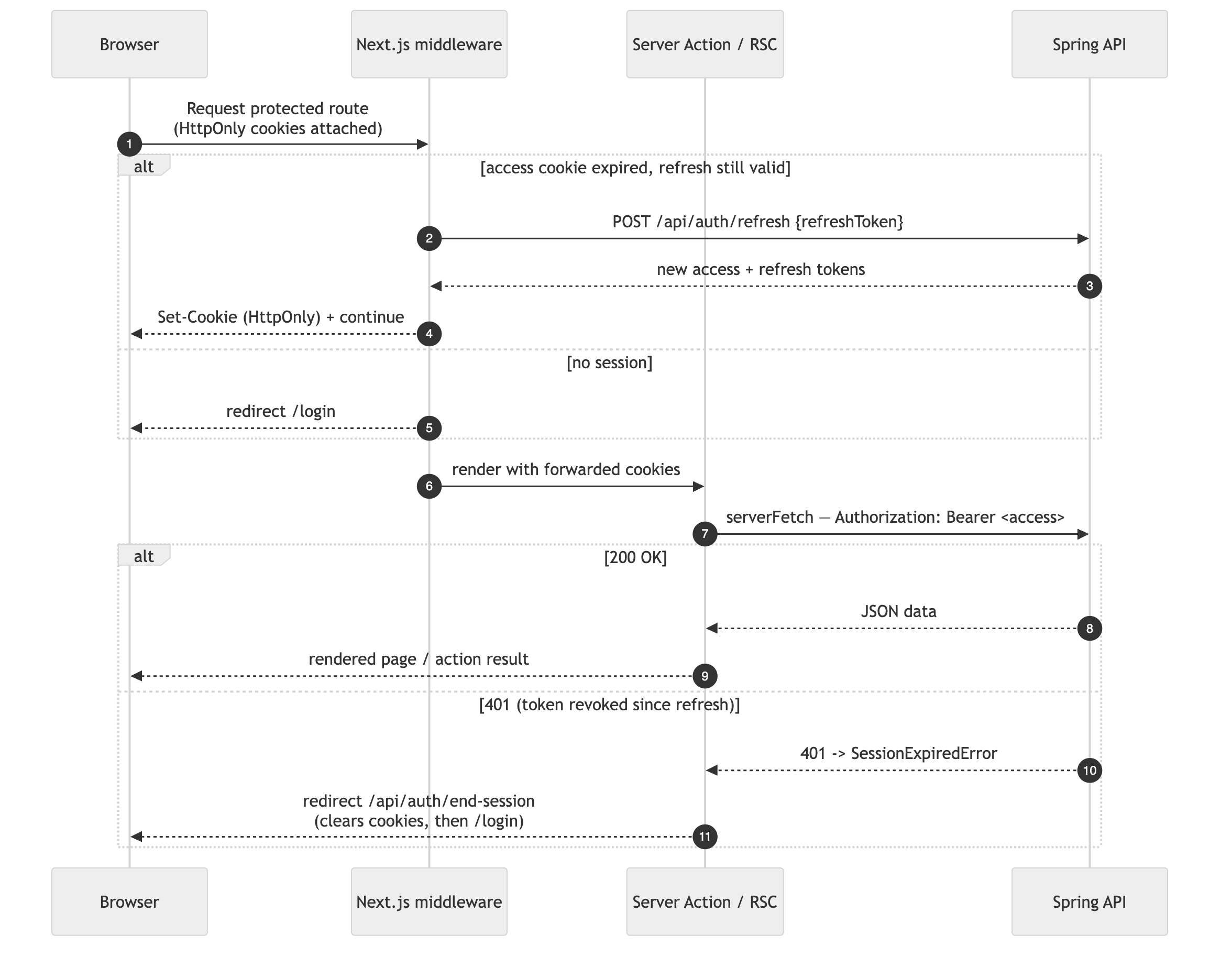
Client components never call the backend directly; everything goes through server actions and gateways running on the Next.js server. This keeps tokens out of browser JavaScript and gives one place to handle errors and auth.
Authentication
- Tokens are held in HTTP-only cookies managed server-side
(
src/server/cookies.ts); browser code never sees them. src/middleware.ts(Edge runtime) guards the(app)route group and redirects unauthenticated visitors to/login.- An auth provider (
features/auth/auth.provider.tsx) exposes the current user to client components.
Editor architecture
The editor route (/workspace/[id]/editor) renders a different editor
component based on the workspace's annotation type — CorefEditor,
NerEditor, PosEditor, or WsdEditor — dispatched by
features/editor/dispatch.tsx. Shared concerns live in
features/editor/core/:
useEditorSession— persists scroll/selection state to the backend so annotators resume where they left off;usePaginatedDocument— lazy-loads token pages for large documents;- shared components (document switcher, help panel, load-more, disagreement indicators).
Adding a new annotation type means adding one sub-folder under
features/editor/ with its own contracts/gateway/actions/components and a
case in the dispatcher — no changes to existing editors.
Configuration
| Variable | Purpose |
|---|---|
NEXT_PUBLIC_API_URL |
Backend base URL as seen from the browser. Required in production builds — the build fails without it. Inlined at build time, so changing it requires a rebuild. |
Server Actions accept request bodies up to 25 MB (configured in
next.config.ts) to accommodate real annotation corpora uploads; keep this
in sync with the backend's multipart limit.
Build & runtime
pnpm buildproduces a standalone output (output: 'standalone'innext.config.ts) — a self-containedserver.jsplus static assets, designed for slim Docker images.- The repo ships a multi-stage
Dockerfile(pnpm install → build → non-root Node 22 Alpine runner) listening on port 3000.